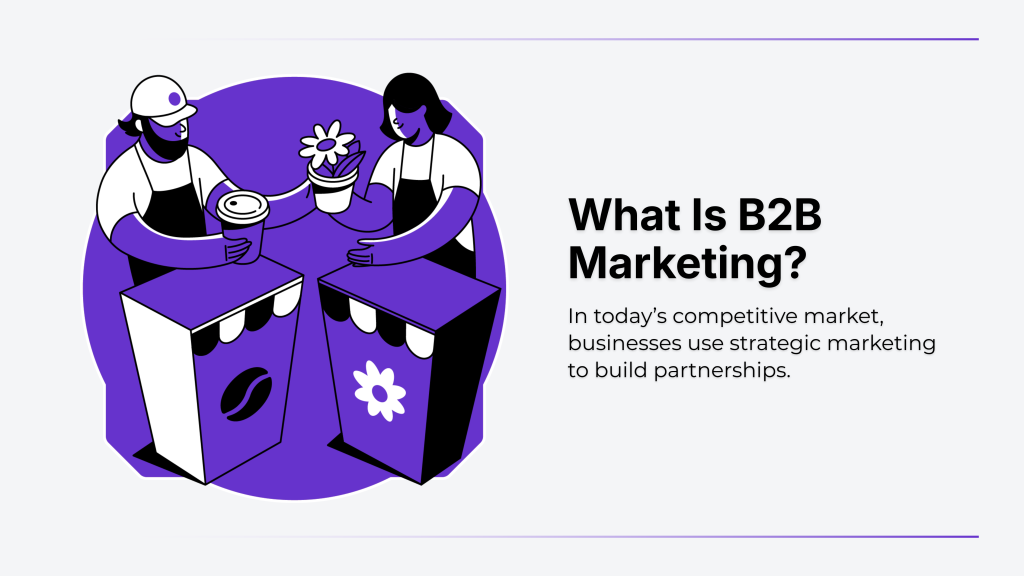
In today’s competitive business landscape, many companies rely on strategic marketing to connect with other organizations and generate long-term partnerships. This approach is known as B2B marketing, which focuses on promoting products or services from one business to another. When people ask what is b2b marketing, they are referring to the methods companies use to reach professional buyers, decision-makers, and organizations rather than individual consumers.
Understanding b2b marketing is important for businesses that want to grow through partnerships, corporate clients, and enterprise solutions. Companies often use a structured B2B marketing technique that includes targeted messaging, digital campaigns, and relationship-building tactics. These strategies support business-to-business sales, improve lead generation, and strengthen brand authority. In addition, modern content marketing helps businesses educate potential clients and guide them through the decision-making process.
Discuss B2B Marketing
To understand what is b2b marketing, it is important to look at how businesses promote products or services to other organizations. B2B marketing, also known as business-to-business marketing, focuses on building relationships between companies rather than targeting individual consumers. In this model, a business sells solutions, tools, or services that help another company improve operations, productivity, or profitability.
When discussing b2b marketing, the buying process usually involves multiple decision-makers, such as managers, executives, and procurement teams. Because of this, companies must develop a structured B2B marketing technique that focuses on research, trust, and long-term partnerships. Businesses often use content marketing, targeted advertising, and email campaigns to educate potential clients about their offerings. These efforts help companies attract qualified prospects, support lead generation, and drive consistent business-to-business sales through informed purchasing decisions.
B2B vs B2C Marketing
To better understand what is b2b marketing, it helps to compare it with B2C marketing, which focuses on selling products directly to individual consumers. While both approaches aim to promote products and increase sales, the target audience and marketing strategies are quite different. B2B marketing targets companies, organizations, and professional decision-makers, whereas B2C marketing focuses on individual buyers and personal purchasing decisions.
Another key difference lies in the buying process. In business to business sales, purchasing decisions usually involve multiple stakeholders, longer research periods, and detailed evaluation of products or services. Because of this complexity, companies rely on structured B2B marketing technique plans and strong B2B content marketing to educate potential clients. In contrast, B2C purchases are often influenced by emotions and quick decisions. Understanding these differences helps businesses design effective campaigns that support B2B lead generation and long-term partnerships.
Benefits of B2B Marketing
Understanding the advantages of B2B marketing helps businesses see why this approach is essential for sustainable growth. When companies learn b2b marketing, they realize that it focuses on building strong relationships with other organizations and creating long-term partnerships. A well-planned B2B marketing strategy not only helps attract potential clients but also strengthens trust and credibility in the marketplace.
Builds Long-Term Business Relationships
One of the major benefits of B2B marketing is the ability to develop long-term partnerships with other companies. Unlike quick consumer transactions, business-to-business sales often involve ongoing contracts, repeat purchases, and strategic collaborations that benefit both organizations.
Higher Value Transactions
Another advantage is the potential for higher-value deals. Companies often purchase products or services in larger quantities, which increases the overall revenue from each deal. Effective lead generation helps businesses identify and engage these high-value prospects.
Improves Brand Authority
Through educational resources such as blogs, case studies, and webinars, content marketing allows companies to demonstrate expertise in their industry. This helps build credibility and positions the business as a trusted solution provider.
Supports Targeted Marketing
A strong B2B marketing technique allows companies to target specific industries, organizations, or decision-makers. This focused approach improves the efficiency of marketing campaigns and increases the chances of successful business-to-business sales.
B2B marketing technique
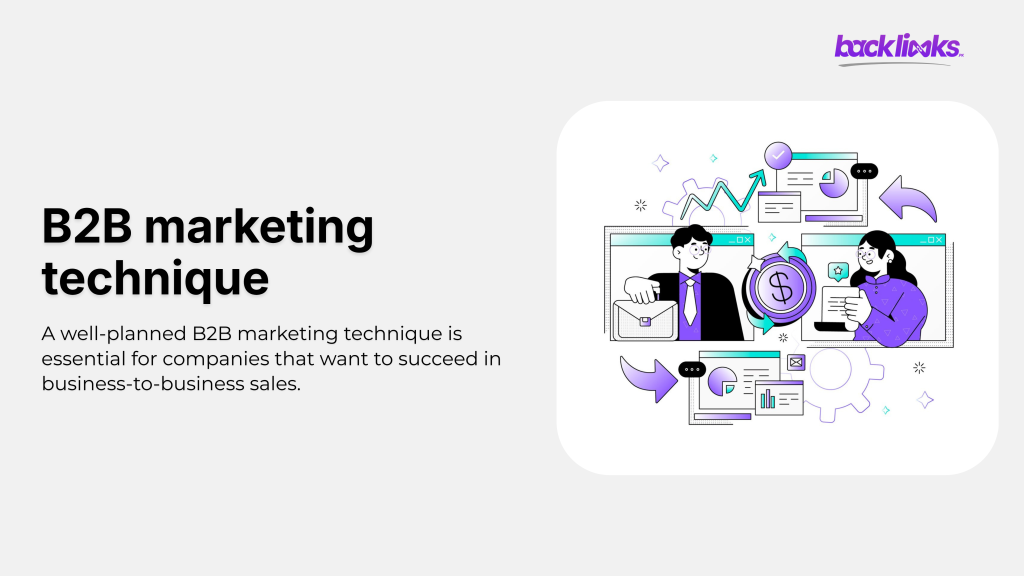
A well-planned B2B marketing technique is essential for companies that want to succeed in business-to-business sales. When organizations understand what is b2b marketing, they realize that the strategy must focus on building trust, delivering value, and addressing the needs of professional decision-makers. Unlike consumer marketing, B2B strategies require deeper research and a clear understanding of industry challenges faced by potential clients.
One key step in a successful B2B marketing technique is identifying the target audience, including companies, managers, and procurement teams responsible for purchasing decisions. Businesses then select marketing channels such as email marketing, search engine optimization, and LinkedIn campaigns to reach these audiences effectively. In addition, companies often rely on content marketing to educate prospects and guide them through the sales funnel. By combining these tactics with strong lead generation, organizations can attract qualified prospects and convert them into long-term clients.
Lead Generation
A critical part of understanding what is b2b marketing is learning how companies attract potential clients through lead generation. Lead generation is the process of identifying and engaging businesses that may be interested in a product or service. In business-to-business sales, this process often begins with awareness campaigns that introduce companies to potential solutions for their operational challenges.
Successful lead generation strategies usually follow a structured sales funnel that guides prospects from awareness to purchase. Businesses use various methods such as landing pages, webinars, email campaigns, and content marketing to capture contact information and nurture relationships. Providing valuable information helps build trust with potential clients and encourages them to move further along the decision-making process. When integrated with a well-defined B2B marketing technique, lead generation becomes a powerful way to attract qualified prospects and increase long-term business growth.
Content Marketing
An essential part of understanding what is b2b marketing is recognizing the role of content marketing in attracting and educating potential clients. Instead of focusing only on direct promotions, businesses create informative content that helps other companies understand industry challenges and solutions. This approach builds credibility and supports a strong B2B marketing technique by guiding prospects through the decision-making process.
Common forms of content marketing include blog articles, whitepapers, case studies, webinars, and industry reports. These resources provide valuable insights that help organizations evaluate products or services before making purchasing decisions. Educational content also supports lead generation by encouraging potential clients to engage with the brand and share their contact information. When businesses consistently publish high-quality content, they strengthen trust with decision-makers and improve opportunities for successful business-to-business sales within competitive markets.
B2B Marketing Channels
A successful B2B marketing technique relies on selecting the right channels to reach business decision-makers and organizations. When companies understand what is b2b marketing, they recognize that multiple communication platforms are needed to promote services and generate qualified leads. These channels help businesses connect with potential clients, share valuable information, and support long-term business-to-business sales relationships.
One of the most effective channels is email marketing, which allows companies to send personalized messages, newsletters, and product updates to targeted prospects. Another important platform is LinkedIn, where professionals and organizations interact, making it ideal for lead generation and networking. In addition, search engine marketing and SEO help businesses reach potential buyers who are actively researching solutions online. Many companies also combine these channels with content marketing, such as blogs and case studies, to educate prospects and guide them through the buying process.
B2B Marketing Channels
A successful B2B marketing technique relies on selecting the right channels to reach business decision-makers and organizations. When companies understand what is b2b marketing, they recognize that multiple communication platforms are needed to promote services and generate qualified leads. These channels help businesses connect with potential clients, share valuable information, and support long-term business-to-business sales relationships.
One of the most effective channels is email marketing, which allows companies to send personalized messages, newsletters, and product updates to targeted prospects. Another important platform is LinkedIn, where professionals and organizations interact, making it ideal for lead generation and networking. In addition, search engine marketing and SEO help businesses reach potential buyers who are actively researching solutions online. Many companies also combine these channels with content marketing, such as blogs and case studies, to educate prospects and guide them through the buying process.
Common B2B Marketing Mistakes
Even when companies understand what is b2b marketing, many still struggle because of common strategic mistakes. One major issue is failing to identify the right target audience. Without clearly defining the companies and decision-makers they want to reach, businesses may invest resources in marketing campaigns that do not support effective business-to-business sales. Successful marketing requires detailed audience research and a focused B2B marketing technique.
Another common mistake is neglecting the importance of valuable content. Many companies focus only on direct promotion instead of investing in content marketing that educates potential clients. Without informative content such as guides, case studies, and industry insights, businesses may struggle to build trust with decision-makers. In addition, poor follow-up systems can weaken lead generation efforts because potential clients may lose interest if communication stops after initial contact. Avoiding these mistakes helps companies build stronger relationships and improve long-term marketing results.
Future Trends in B2B Marketing
The future of B2B marketing is evolving rapidly as technology and digital platforms continue to transform how companies connect with potential clients. When businesses explore what is b2b marketing today, they often discover that modern strategies rely heavily on data-driven insights and automation tools. Technologies such as marketing automation, artificial intelligence, and advanced analytics allow companies to personalize campaigns and deliver relevant messages to decision-makers.
Another growing trend is the increasing importance of personalized communication within business-to-business sales. Companies are focusing on tailored experiences that address the specific needs of each organization. In addition, content marketing is becoming more interactive through webinars, podcasts, and live demonstrations that engage audiences more effectively. Businesses are also improving lead generation by using advanced targeting methods on professional networks like LinkedIn. These innovations are shaping the future of marketing strategies for organizations worldwide.
Conclusion
Understanding what is b2b marketing is essential for companies that want to build strong relationships with other organizations and achieve long-term growth. Unlike consumer marketing, B2B marketing focuses on delivering value to businesses through strategic communication, education, and trust-building. By implementing an effective B2B marketing technique, companies can connect with decision-makers, address their challenges, and create meaningful partnerships. Successful businesses often combine several tactics such as content marketing, targeted campaigns, and data-driven communication to guide prospects through the buying journey. These strategies help improve lead generation and support consistent business-to-business sales. As digital technologies continue to evolve, companies that adapt their marketing methods and focus on delivering relevant information will remain competitive.
FAQs
What is b2b marketing refers to the process where one business promotes products or services to another business instead of individual consumers. This approach focuses on building professional relationships and supporting long-term business-to-business sales through targeted communication and value-driven strategies.
The main difference between B2B marketing and B2C marketing is the target audience. B2B campaigns focus on companies and decision-makers, while B2C marketing targets individual consumers. Because of this, B2B marketing techniques often involve longer sales cycles and more detailed information.
Lead generation is the process of identifying and attracting potential business clients who may be interested in a company’s products or services. It often involves email campaigns, webinars, landing pages, and educational content marketing materials.
Content marketing helps businesses educate potential clients and build trust before a purchase decision is made. Informative content such as case studies, whitepapers, and blog articles can guide prospects through the buying process.
Common channels for B2B marketing include email marketing, LinkedIn, search engine optimization, webinars, and digital advertising. These platforms support effective lead generation and help businesses reach professional audiences.