
Choose your preferred support
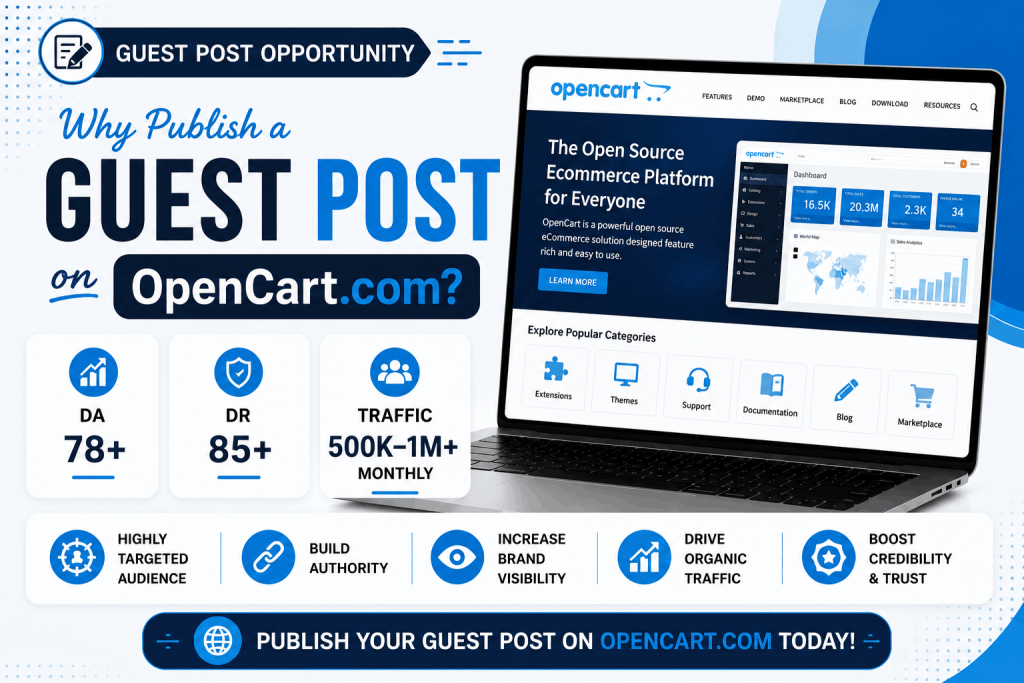
Building authority in eCommerce is becoming increasingly dependent on publishing within environments that already attract merchants, developers, digital businesses, and platform decision-makers.
OpenCart has developed into a recognized eCommerce ecosystem centered around online store creation, commerce infrastructure, platform flexibility, and implementation-focused publishing. Beyond the software itself, its editorial environment attracts businesses researching store optimization, platform selection, integrations, website performance, operational scalability, and commerce growth.
Unlike broad technology publications that cover multiple unrelated categories, OpenCart operates closer to the commerce execution layer. That distinction creates stronger contextual alignment for brands that serve online businesses directly.
For organizations operating in SaaS, e-commerce enablement, managed services, hosting, development, cloud infrastructure, digital transformation, or platform operations, contributor placements within this environment can support stronger topical association and long-term organic visibility.
| Metric | Details |
| Website | opencart.com |
| Niche | eCommerce, Online Stores, Development, Digital Infrastructure |
| Domain Rating | DR 85+ |
| Estimated Traffic | 500K–1M+ |
| Audience Regions | Global (US, UK, Europe, Asia-Pacific) |
| Link Type | Dofollow |
| Content Style | Editorial & Informational |
| Placement Type | Sponsored Post / Contributor Article |
Many publications cover digital business.
Fewer operate inside the actual infrastructure layer, where businesses evaluate how stores are built, optimized, managed, and scaled.
That positioning gives OpenCart stronger contextual value for companies working near commerce implementation rather than general marketing exposure.
Publishing within this ecosystem allows contributor content to appear alongside discussions connected to:
As search systems increasingly evaluate relationships between topics rather than isolated backlinks, publication environments with stronger thematic consistency can contribute more effectively to authority development.
Key advantages include:
Content generally performs best when tied to commerce execution and practical implementation.
Recommended categories include:
Managed Services
Commerce Operations
Store Architecture
Application Management
Cloud Hosting
Managed Hosting
Website Scalability
Performance Optimization
Conversion Optimization
Customer Experience
Checkout Improvements
Commerce Analytics
Store Maintenance
Development Workflows
Security Practices
Extension Management
Digital Transformation
Commerce Enablement
Operational Efficiency
Business Automation
Migration Strategies
Integration Frameworks
Commerce Technology Trends
OpenCart tends to create stronger value for businesses positioned close to commerce enablement.
Examples include:
Brands working to strengthen authority around online commerce infrastructure often gain more value from niche publication environments than broad media exposure.
Search visibility increasingly reflects how closely surrounding content aligns with target topics.
A contextual placement inside eCommerce implementation content can contribute stronger relevance signals than unrelated technology placements.
Editorial placements across commerce-focused environments help reinforce expertise signals around platform services and operational capabilities.
Relevant publication ecosystems support broader indexing opportunities and stronger topic clustering.
As search continues evolving toward entity understanding, recurring association with recognized commerce environments can strengthen brand recognition.
Visitors consuming implementation-focused content frequently demonstrate stronger commercial intent than general readership audiences.
Client Website: flairstech.com
Published Article:
https://www.opencart.com/blog/managed-application-services-for-e-commerce-platforms
This placement was designed to position FlairsTech closer to conversations surrounding operational scalability and managed commerce environments.
Rather than approaching the publication through promotional messaging, the article focused on educational positioning around managed application services and how businesses support performance, continuity, and operational efficiency across modern eCommerce platforms.
The objective was to create natural alignment between the publisher environment and the client’s service positioning.
The approach created:
Because the article matched the surrounding ecosystem and audience expectations, the placement supported stronger contextual continuity.
Content quality remains one of the strongest variables affecting placement performance.
Recommended standards:
Content that solves operational problems typically performs better than purely promotional submissions.
Evaluate whether OpenCart aligns with campaign goals.
Identify themes, supporting entities, and target relevance.
Develop publication-ready content with contextual integration.
Review readability, editorial standards, and SEO alignment.
Submit and publish following approval.
Deliver live placement details and publication confirmation.
Building editorial coverage across related eCommerce publications can create a stronger and more diversified authority profile.
Submit your website, target page, and content objective, and placement suitability can be reviewed before publication planning begins.
Yes, provided usage remains natural.
Yes, especially within commerce-related ecosystems.
Generally yes.
Editorial placements are intended for sustained visibility.
Yes when content aligns with audience expectations.