Backlinks are one of the oldest, strongest, and most influential ranking factors in Google’s algorithm. No matter how much SEO evolves, AI search, semantic matching, or E-E-A-T signals, they continue to work as the most critical “trust votes” that determine which websites deserve to rank at the top. If you’ve ever wondered why some brands outrank everything in sight, even with similar content, the answer almost always connects back to them and referring domains.
But what exactly are they? Why do they matter? How do you determine which they help your rankings and which ones hurt? And how do businesses acquire high-quality backlinks without getting penalized? This guide breaks everything down with real SEO logic, not fluff, so you can understand backlinks the same way advanced SEO teams and agencies do.
What Are Backlinks?
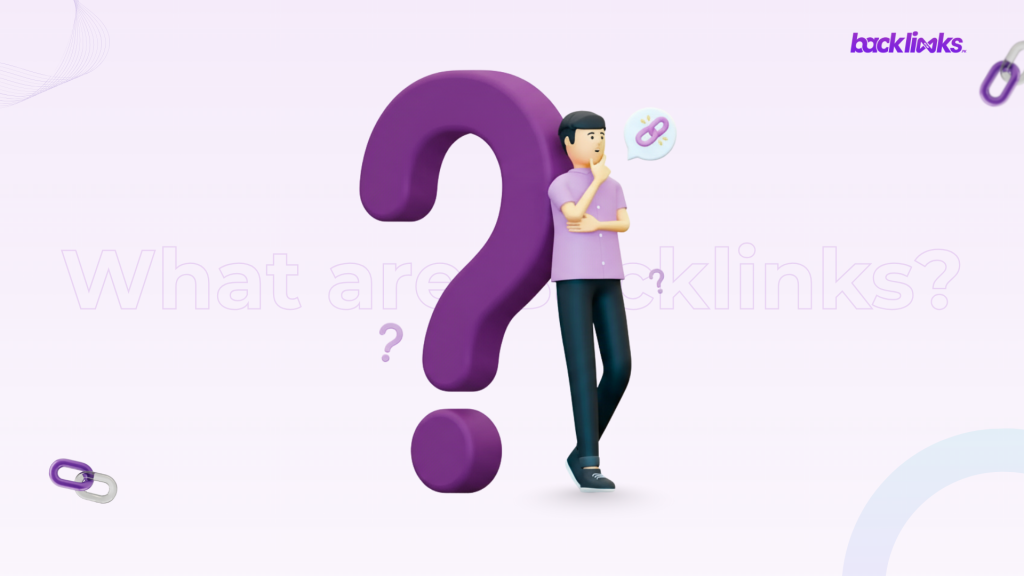
They (also called inbound links or incoming links) are links from another website pointing to your site. When Site A links to Site B, Site B receives a backlink. Google treats this as a confidence signal, indicating that an external source finds your content valuable enough to reference.
Backlinks are a foundational part of Google’s early PageRank system, the algorithm that measures a page’s authority and importance based on the quality and quantity of links pointing to it. Although SEO has evolved dramatically over the past 20 years, PageRank and backlink signals still play a crucial role. Effective backlinks building consistently shows a strong correlation between high-quality backlinks, referring domains, and securing top 3 search rankings.
Why are they Important in SEO?
They carry multiple SEO benefits that go beyond simple ranking boosts. Here’s why search engines treat them as high-impact signals:
They help Search Engines Determine Authority
When authoritative sites link to you, it increases your domain authority (DA), domain rating (DR), and overall trust score. These authority metrics are not official Google metrics, but they reflect backlink strength and correlate strongly with rankings.
They Improve Keyword Rankings
The more relevant and high-authority backlinks you have, the easier it becomes to rank for competitive search terms. Based on thousands of SEO tests, content with strong referring domains consistently outranks content without them, even if the content is similar.
They Pass Link Equity (SEO Value)
They pass a measurable value often referred to as link equity. This is how Google distributes authority from one page to another, enabling your important pages to grow in rankings without additional on-page changes.
They help Google Detect Relevance
They help Google understand what your page is about. A backlink from a relevant site acts as a context signal, reinforcing your topic and increasing topical trust.
They Support E-E-A-T
Expertise, Experience, Authoritativeness, and Trustworthiness are heavily supported by them. When authoritative websites mention you, Google builds confidence in your brand.
Types:
Not all carry equal weight. Some drive massive ranking improvements; others can hurt your website.
Below are the core backlink types you must understand:
1. Dofollow Backlinks
These are the most valuable backlinks because they pass link equity (PageRank). Most natural editorial links fall in this category.
2. Nofollow Backlinks
These links include a nofollow attribute that instructs Google not to pass authority. They’re still useful for traffic, brand building, and natural link profile diversity.
3. Editorial Backlinks
Contextual, naturally earned links from articles. These are considered the strongest links in SEO.
4. Guest Post Backlinks
Links included in high-quality guest articles. Effective when done with relevance and authenticity.
5. Directory & Resource Page Links
These help with brand visibility. Not strong for ranking, but beneficial for NAP consistency and local SEO.
6. User-Generated Content (UGC) Links
Links from forums, comments, or community posts are marked as UGC. Not strong signals, but naturally part of any healthy link profile.
7. Sponsored Links
Links marked with rel=”sponsored”. These are fine, but don’t pass ranking power.
8. Social Media Links
Great for visibility and indexing. Even though they are nofollow, they help search engines discover new content.
What Makes a Backlink High-Quality?
Google assesses backlink quality through several factors. The first is relevance. Those from websites within the same niche or related industries hold far more weight because they confirm topical alignment. For example, a fitness website linking to a nutrition article carries stronger relevance than a random tech blog linking to it.
Authority is another factor. Links from trusted domains with high DR or DA provide more ranking power. Placement also matters; links embedded naturally within informative paragraphs are more valuable than those hidden in footers, sidebars, or profile sections. Anchor text influences how search engines interpret the linked page’s theme, but over-optimized exact-match anchors can appear manipulative. Google also checks editorial value, natural links earned because your content is genuinely helpful carry more trust than those placed for optimization alone. Finally, unique referring domains matter more than multiple links from the same site. It’s better to have 20 links from 20 websites than 200 links from one.
How Websites Acquire Backlinks
Websites acquire them through two main methods: earning them naturally or building them intentionally. Naturally earned they come from other websites that find your content useful, cite it as a source, or reference it in their blog posts. These usually happen because of strong content marketing, unique insights, original research, infographics, tools, or authoritative guides.
The second method is deliberate link building. This includes guest posting, manual outreach, link swaps, digital PR campaigns, broken link building, resource page outreach, and link reclamation. Link builders contact site owners or editors and request inclusion in relevant articles. Paid backlinks and sponsored placements are also common, but must be used cautiously since they violate Google’s guidelines when disguised as editorial links. Successful SEO campaigns generally combine natural link earning with strategic link building to maximize reach and authority.
Popular Link-Building Strategies Used Today
SEO experts and major competitors frequently highlight several proven backlink strategies. One is creating linkable assets, valuable resources such as industry studies, templates, tools, statistics pages, and how-to guides that naturally attract editorial backlinks. Another strong strategy is digital PR, where brands pitch newsworthy stories, insights, or expert commentary to journalists, earning high-authority media coverage.
Guest posting remains powerful when used on relevant sites and written with genuine expertise. Broken link building involves finding dead external links on authoritative pages, then suggesting your content as a replacement. Link roundups collect the best resources on a topic, making them ideal opportunities for visibility. Testimonial links are easy wins because companies often feature customer quotes with them. Reverse engineering competitor backlinks with tools like Ahrefs or SEMrush helps identify link opportunities already proven to work in your niche.
How to Evaluate If a Backlink Helps Your Rankings?
A backlink is beneficial when it meets specific SEO criteria. A helpful backlink usually comes from an authoritative, relevant domain and uses natural anchor text. It appears in the main content area of a page rather than in a footer or sidebar. It is dofollow rather than nofollow. It comes from a unique referring domain. And it is placed within a genuine editorial context rather than appearing as a forced insertion.
If a backlink comes from a low-quality website, spam directory, link farm, or irrelevant content, it may hurt your SEO. Google’s algorithms can detect manipulative link schemes through unnatural patterns, excessive exact-match anchors, or rapid link bursts. Therefore, evaluating backlinks through analytics tools and regular backlink audits helps maintain a healthy SEO profile.
How to Maintain a Healthy Backlink Profile?
Maintaining backlink quality is just as important as building it. Search engines constantly scan for patterns that indicate manipulation or spam. Regular backlink audits help identify toxic backlinks, which often come from PBNs, hacked sites, foreign spam domains, automated directories, or low-effort link generators. If harmful links accumulate, they can trigger manual actions or ranking drops.
In these cases, website owners must analyze toxic links and disavow them using Google’s Disavow Tool. It should be used only when necessary.
Can You Rank Without Backlinks?
For extremely low-competition keywords, ranking without them is possible. However, for any competitive keyword, whether in SEO, finance, health, technology, local business, or e-commerce, they are essential. Competitor studies consistently show that top-ranking pages almost always have stronger backlink profiles than those ranking below them.
Without them, a site struggles to build authority, relevance, and competitive trust signals. Google may index the content, but it will rarely outperform established competitors with robust backlink profiles. They remain the difference maker when keyword difficulty increases.
How do they Fit Into Modern SEO?
As AI, machine learning, and semantic search become more influential in Google’s ranking systems, they continue to play a foundational role. Google now evaluates them not only for authority but also for entity associations, brand mentions, contextual understanding, and relevance. AI systems interpret how a backlink fits into the overall meaning and trustworthiness of a website.
Modern SEO requires balancing strong backlink acquisition with high-quality content, brand-building, and structured data. They now support E-E-A-T signals directly by validating expertise, authority, and trustworthiness through external endorsements. Even with AI-generated answers and zero-click search experiences growing, strong backlinks help ensure your website remains the authoritative source search engines rely on.
Conclusion
They are the backbone of SEO and continue to hold tremendous influence over rankings, authority, and brand visibility. They help search engines understand which websites deserve to be trusted, which content is relevant, and which pages offer genuine value. Whether earned naturally or built through strategic outreach, they shape how competitive your website can become.
By focusing on high-quality, relevant, editorial backlinks and maintaining a clean backlink profile, you create long-term SEO momentum. In a world filled with AI-driven search engines and algorithmic shifts, they remain a timeless indicator of credibility. Brands and businesses that invest in strong backlink strategies ultimately dominate the search results, attract consistent organic traffic, and build lasting authority online.
FAQs:
What are backlinks in SEO?
They are links from other websites pointing to your site. Search engines treat them as trust signals, helping define your authority, relevance, and ranking potential.
Why are they important for Google rankings?
They show Google that your content is credible and worth recommending. High-quality of seo backlinks improve authority, increase keyword rankings, and drive more organic traffic.
How do they improve website authority?
When reputable websites link to you, Google views your site as trustworthy. This increases domain authority (DA), domain rating (DR), and your overall ranking strength.
What makes a backlink high-quality?
A high-quality backlink comes from a relevant, authoritative website, uses natural anchor text, appears within editorial content, and originates from a unique referring domain.
How can I build them safely?
You can build them through guest posting, digital PR, broken link building, resource page outreach, linkable asset creation, and competitor backlink analysis.